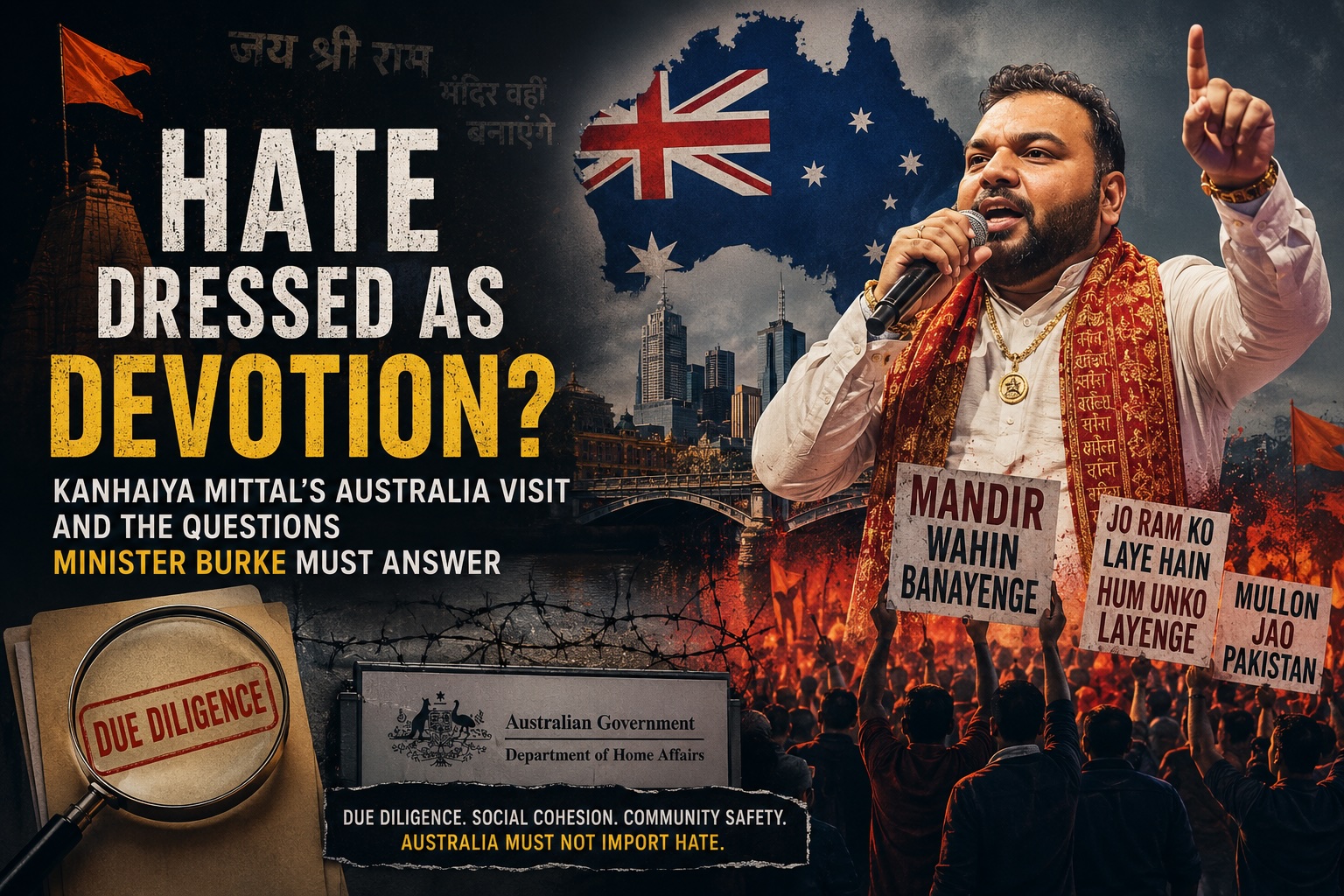
Hate Dressed as Devotion? Kanhaiya Mittal’s Australia Visit and the Questions Minister Burke Must Answer
-
by
AAI
When hate travels, it does not always arrive with a manifesto.
Sometimes it arrives as a song.
Sometimes it arrives as a devotional performance.
Sometimes it arrives through community posters, religious venues and cultural events that may appear harmless to those unfamiliar with the politics being imported.
That is why the advertised Australian visit of Indian devotional singer Kanhaiya Mittal raises serious questions for the Minister for Home Affairs and Minister for Immigration and Citizenship, Tony Burke.
Promotional material circulated online advertising Mittal for events in Melbourne on 6 June 2026 and Brisbane on 7 June 2026. By the time many affected communities became aware of these events, they had either taken place or were likely already underway.
The issue now is not only whether those events should have gone ahead.
The deeper issue is whether Australia’s immigration and border systems are equipped to identify overseas performers whose public record has been linked to Hindutva pop, anti-Muslim hate and religious majoritarian mobilisation.
This is not about Hinduism. It is not about Hindu devotional music. It is not about preventing Hindu communities from celebrating their faith, culture or identity in Australia.
It is about whether Australia is doing enough to prevent anti-Muslim hate from being imported under the cover of culture and devotion.
The Australian events promoted
Promotional material circulating online advertised Kanhaiya Mittal for events in Melbourne on 6 June 2026 and Brisbane on 7 June 2026.
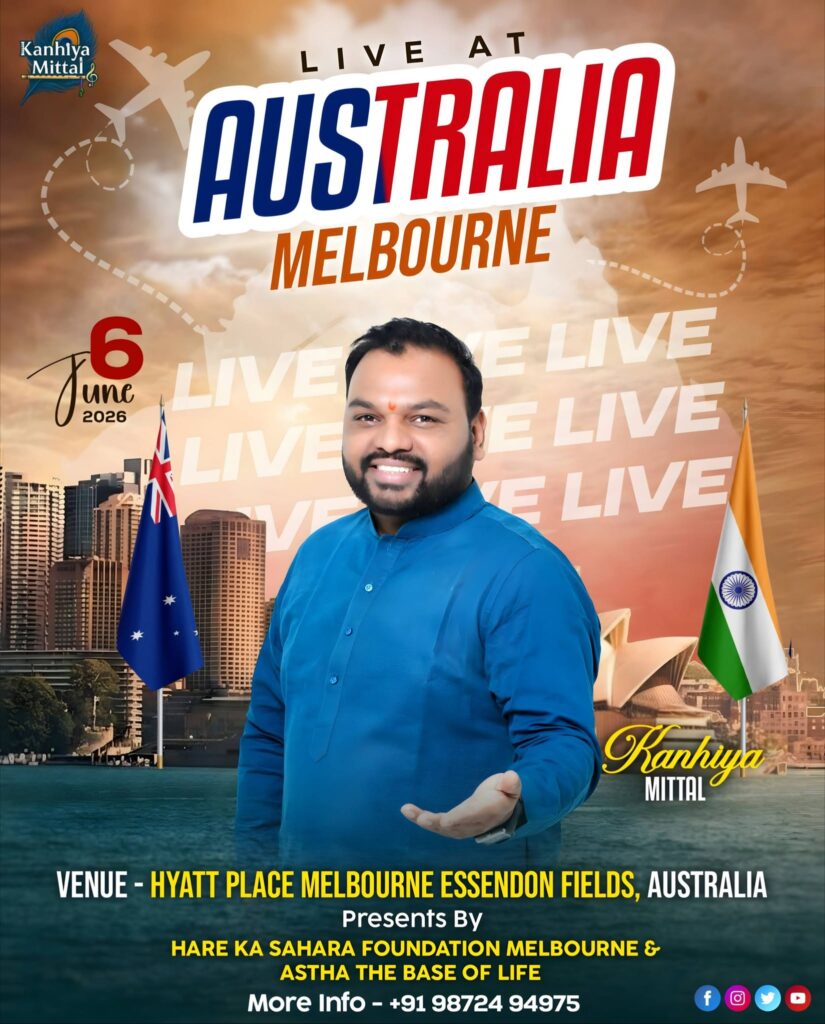
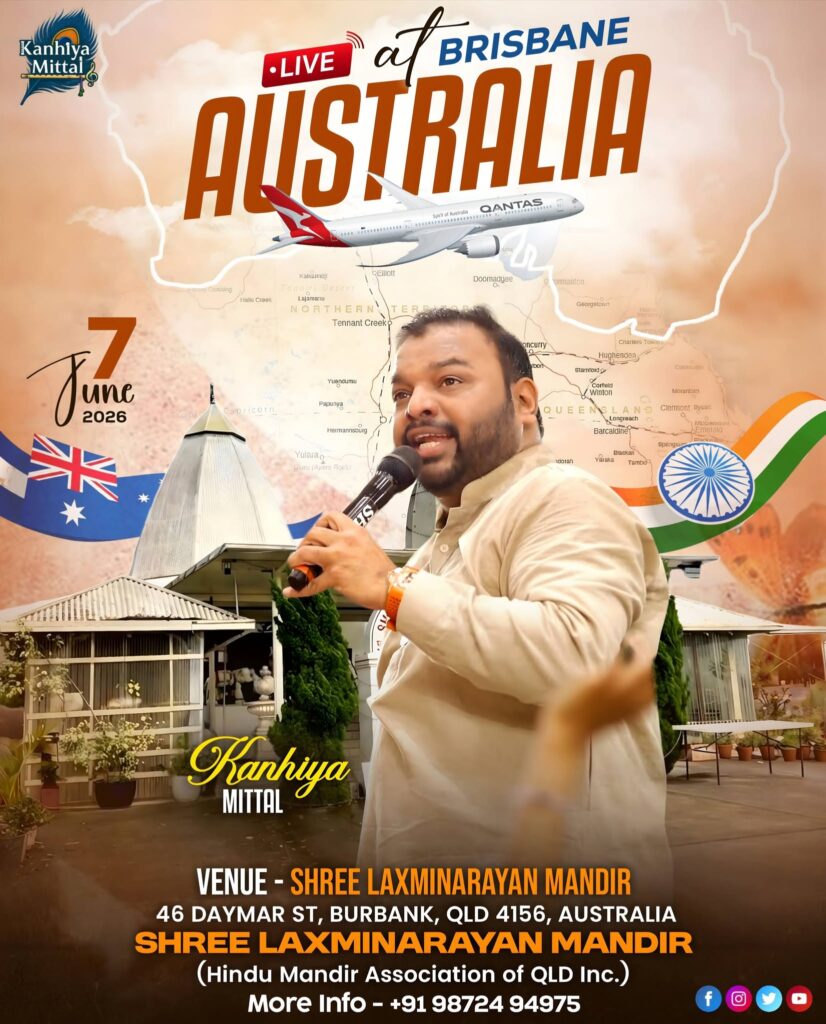
For many people, these events may have appeared to be ordinary devotional or cultural gatherings. But for South Asian minority communities familiar with the politics of Hindutva pop, Mittal’s visit raises serious concerns about due diligence, community safety and social cohesion.
The events may now have passed. But the public-interest question remains.
What safeguards exist to ensure that Australia does not become a stage for hate dressed as devotion?
What is Hindutva pop?
Hindutva pop is a genre of political-religious music in India. It often uses the emotional language of devotion while promoting majoritarian political messaging.
The concern is not music itself. The concern is the way music can become a tool for mobilisation — catchy, emotional, repetitive and capable of turning religious identity into political aggression.
The Caravan has reported that during Ram Navami processions in India, communal violence followed a pattern in which Hindu mobs entered Muslim neighbourhoods, shouted communal slogans and played provocative songs with Islamophobic content. The same report referred to Kanhiya Mittal’s song “Jo Ram Ko Laye Hain, Hum Unko Layenge” being played during a procession through a Muslim neighbourhood near Roorkee in Uttarakhand. [1]
A Columbia Journalism Review / Tow Center investigation also examined Hindutva pop on YouTube and reported that such music can inflame religious tensions. That investigation specifically discussed Mittal’s “Jo Ram ko laye hai hum unko layenge”, stating that the song encouraged the “saffronisation” of Uttar Pradesh through messaging about “taking back” mosques claimed by the Hindu right wing to be ancient temples. [2]
While the primary concern raised here is anti-Muslim hate linked to Hindutva pop and claims over Muslim religious sites, the public record around Kanhaiya Mittal also includes broader anti-minority concerns. Citizens for Justice and Peace has listed Kanhiya Mittal in its hate map, describing him as a devotional singer who delivered hate speech demonising Christian minorities. TrueScoop News also reported that Christian community leaders in Ludhiana accused Kanhaiya Mittal of hate speech against Christians. These reported allegations reinforce the need for careful, conduct-based immigration due diligence before overseas performers with public records linked to anti-minority vilification are granted entry for public events. [3] [4]
These are not minor cultural controversies. They go to the heart of how religious performance can become a vehicle for exclusionary nationalism and anti-Muslim hostility.
Why the Hindi lyrics and slogans matter
For Australian audiences unfamiliar with Hindi or North Indian political-religious slogans, some phrases associated with Hindutva pop may sound devotional, cultural or harmless when left untranslated.
Translation changes that.
The problem is not the Hindi language. Nor is the problem Hindu religious vocabulary. The problem is the political and social context in which these phrases are used — especially when religious language is fused with majoritarian domination, anti-Muslim exclusion and claims over Muslim religious sites.
One phrase associated with Kanhaiya Mittal is:
“Jo Ram Ko Laye Hain, Hum Unko Layenge.”
This can be translated as:
“We will bring to power those who brought Ram.”
On its face, the phrase refers to Lord Ram. But in its political context, it is widely understood as a slogan supporting those credited by the Hindu right wing with the construction of the Ram temple in Ayodhya, on the site where the 16th-century Babri Masjid once stood before it was demolished by a Hindu mob in 1992.
The concern is that devotion to Ram is being used as a vehicle for political mobilisation, majoritarian triumphalism and the normalisation of claims over Muslim religious sites.
Another slogan reported in the wider Hindutva mobilisation ecosystem is:
“Mandir vahin banayenge.”
This means:
“We will build the temple there.”
This phrase has a specific historical resonance because it was associated with the campaign around the Babri Masjid and the demand to build a Ram temple at that site. In that context, the slogan is not simply about temple worship. It is tied to a political movement that resulted in the destruction of a mosque and decades of communal tension.
Another reported phrase is:
“Mullon Jao Pakistan.”
This means:
“Mullahs, go to Pakistan.”
This is especially concerning because it treats Muslims as outsiders in their own country. It implies that Muslims do not properly belong unless they leave.
Another reported phrase is:
“Topi Wala Bhi Sar Jhuka Kar Jai Shri Ram Bolega.”
This means that even the person wearing a skullcap will bow and say “Jai Shri Ram.”
In the Indian context, the skullcap is commonly used as a marker of Muslim identity. The phrase is therefore troubling because it imagines Muslims being compelled to bow and chant a Hindu religious slogan. For Muslim communities, this can be heard not as devotion, but as humiliation, domination and forced submission.
These translations show why the concern is not simply that Hindi devotional language is being used.
The concern is that religious language is being fused with political domination, anti-Muslim exclusion and threats of social humiliation.
When such songs are performed, promoted or normalised in diaspora settings, they can carry those meanings into Australian community spaces
This is an immigration due diligence issue
Australia’s migration system already recognises that visa decisions can involve more than ordinary criminal history.
Section 501 of the Migration Act allows visa refusal or cancellation on character grounds. Public guidance on section 501 explains that a person may fail the character test where there is a significant risk that, while in Australia, they would vilify a segment of the Australian community, incite discord in the Australian community or a segment of it, or represent a danger to the Australian community or a segment of it. [3]
That makes this matter directly relevant to Minister Burke’s portfolio. The Department of Home Affairs lists Tony Burke as Minister for Home Affairs and Minister for Immigration and Citizenship. [4]
The question is not whether every controversial overseas figure should be excluded.
The question is whether there is a clear, fair, evidence-based and conduct-based process for assessing overseas performers and speakers whose public record raises credible concerns about anti-Muslim hate, vilification or incitement of social discord.
If public reporting exists overseas about anti-Muslim songs, Hindutva pop, religious majoritarianism and claims over Muslim religious sites, who is responsible for assessing that material before a visa is granted?
Does Home Affairs assess non-English material, diaspora media, songs, speeches and online content?
Does it consider whether a proposed visit may deepen fear, intimidation or social discord among Australian Muslim communities?
These are not abstract questions. They go directly to the safety and dignity of multicultural communities in Australia.
Social cohesion cannot be selective
Australia has rightly become more attentive to the risks of antisemitism, Islamophobia, racism and extremist mobilisation. But social cohesion cannot be selective.
If Australia takes anti-minority hate seriously in one context, it must take it seriously in all contexts.
Anti-Muslim hate from far-right Hindutva sources must be taken seriously.
The fears of Muslim communities must not be treated as secondary, inconvenient or too complex.
Multiculturalism is not merely the celebration of diversity. It is the protection of equal dignity.
Questions for Minister Burke
Minister Burke, affected communities deserve clear answers.
- What visa category was granted for Kanhaiya Mittal’s Australian visit and advertised performances in Melbourne and Brisbane on 6 and 7 June 2026?
- What due diligence was undertaken before the visa was granted, including assessment of publicly available reporting linking him to Hindutva pop, alleged anti-minority hate speech and religious majoritarian mobilisation?
- Did the Department of Home Affairs assess whether his public record raised risks of vilifying a segment of the Australian community, inciting discord, or causing fear among affected minority communities?
- Does Home Affairs assess non-English material, diaspora media, songs, speeches and online content when considering social cohesion risks linked to visiting performers or speakers?
- Are concerns raised by affected communities, including Muslim, Christian, Dalit and other South Asian minority communities, considered before visas are granted?
- Will the Minister review whether current visa-screening processes are adequate for overseas performers, speakers or religious-political figures publicly linked to anti-minority hate, vilification or extremist mobilisation?
- What steps will the Minister take to ensure this does not happen again, including clearer conduct-based guidance to prevent Australia from inadvertently providing entry or public platforms to overseas figures whose public record raises credible concerns about anti-Muslim hate, vilification or incitement of social discord?
Take action
Concerned community members should write to Minister Burke and ask for a review of how Australia assesses visa applications from overseas performers, speakers and religious-political figures publicly linked to anti-Muslim hate, vilification or extremist mobilisation.
This is not about targeting any religion or community. It is about ensuring that Australia’s immigration system applies a fair, evidence-based and conduct-based standard to all visitors.
If you or your organisation have concerns about the impact of far-right Hindutva extremism and anti-Muslim hate in Australia, please reach out to the Alliance Against Islamophobia through our website.
Community concerns, examples and evidence are important in helping build a stronger public record and advocating for better safeguards.
No community should have to wait until harm occurs before their concerns are taken seriously.
Source notes
[1] The Caravan, “The Hindutva pop singers fuelling a politics of hate”.
[2] Columbia Journalism Review / Tow Center, “YouTube hosts Hindutva pop videos that violate its hate policies, auto-generates more”
[3] Citizens for Justice and Peace, “Kanhiya Mittal, a devotional singer, delivers hate speech”
[4] TrueScoop News, “Kanhaiya Mittal accused of giving ‘hate speech’ against Christians in Ludhiana”
[5] Australian Human Rights Commission, “When can a visa be refused or cancelled under section 501?”
[6] Department of Home Affairs, “The Hon Tony Burke MP”