What We Don’t Measure, We Don’t See
 admin@aai.support
Ask directly about discrimination. Show what changed.
When someone enters a hospital, they should expect to be heard, taken seriously and involved in decisions about their care.
But how do we know whether assumptions about their religion, race, name, dress or background are shaping how they are treated?
The Alliance Against Islamophobia’s submission, Seen as an Individual: Racism, Islamophobia and Patient Safety, proposes stronger accountability for racism and discrimination in healthcare.
Within that broader proposal are two practical priorities: ask patients directly about unfair treatment, and require services to report back on action and results
1. Ask directly
The Australian Hospital Patient Experience Question Set—AHPEQS—has 12 core questions covering matters such as listening, individual needs, involvement, communication, pain relief and safety.
These questions matter. But none directly asks whether unfair treatment was related to a patient’s background, identity or appearance.
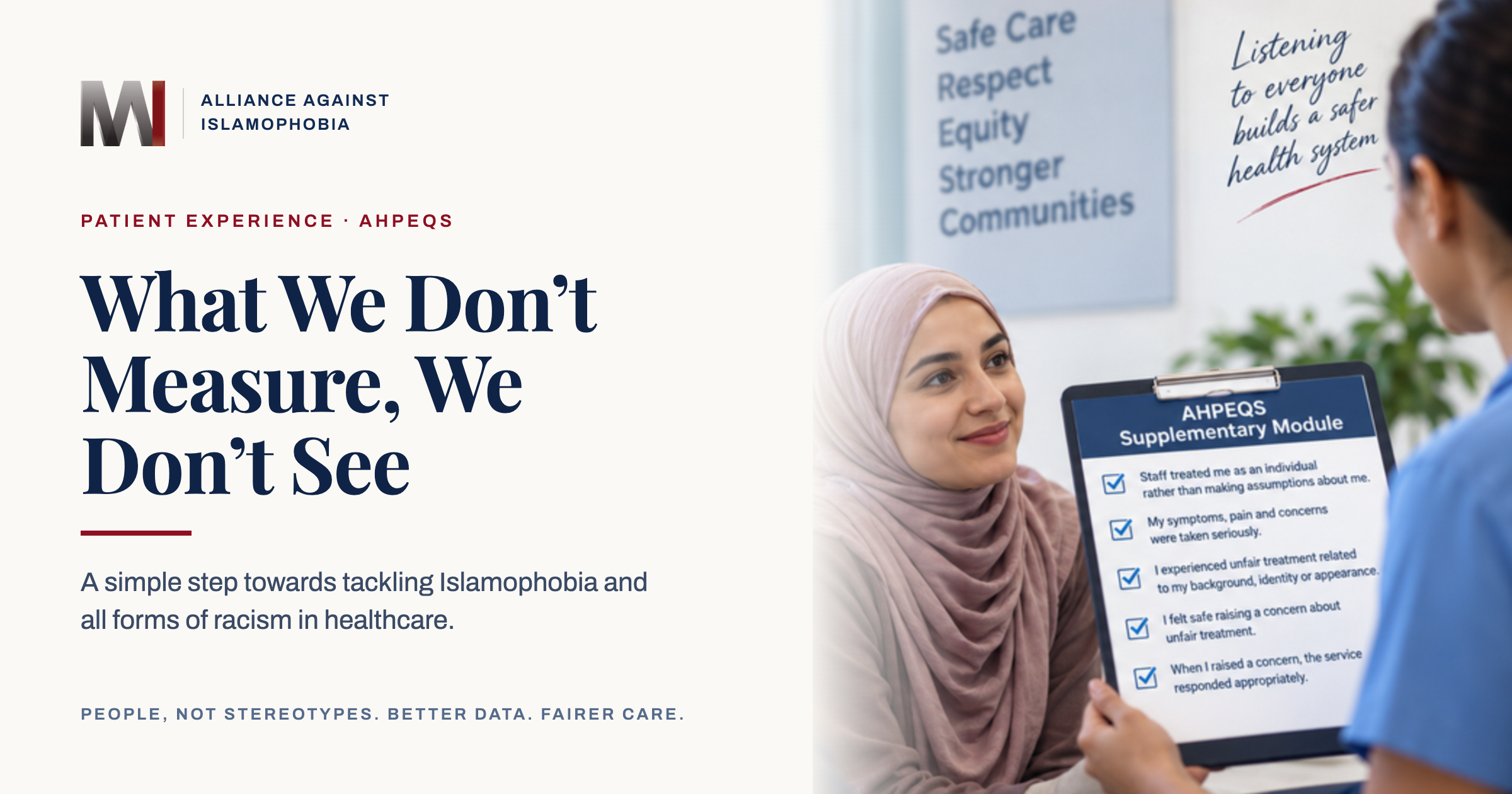
AAI proposes developing and testing a short supplementary module with patients. One proposed item asks, in question form:
During this care, did you experience unfair treatment that you believe was related to your background, identity or appearance?
The submission offers five illustrative items covering individual treatment, concerns being taken seriously, unfair treatment, safety in speaking up and the service’s response.
These are starting points for testing. Development should build on existing measures, avoid duplication and focus on missing information.
An answer would not automatically prove that discrimination caused a clinical decision. It would record the patient’s experience and help identify patterns requiring investigation.
Services should act through existing feedback, complaints and safety systems while the new questions are developed.
2. Show what changed
Consultation that changes nothing is tokenism.
Not every proposal must be accepted. But communities must have a genuine opportunity to shape decisions and receive clear reasons for the outcome.
Roundtables, submissions and advisory groups should help answer three questions:
- What did you hear?
- What did you change?
- Did care improve?
Services should report back to participating patients and communities on their decisions, actions and results—including how they are responding to unresolved concerns.
A policy promising zero tolerance for racism is a commitment. Showing that patients experienced better care is evidence of progress.
Why complaints are not enough
Patients may be too unwell to complain, unsure how, or worried about being labelled difficult. Low complaint numbers cannot establish that discrimination is absent.
Asking directly provides another route for identifying concerns. More reports may reflect greater trust or safer reporting, rather than worsening care. Results need careful interpretation and follow-up.
For Muslim patients, stereotyping may affect whether symptoms are believed, how concerns are addressed or how family advocacy is interpreted. The same approach can help identify unfair treatment affecting other communities.
Taking every patient seriously makes care safer.
Transparency with privacy
Participation in this data collection should be voluntary, with a clear explanation of how information will be used. Declining to answer must not affect care.
Reporting should use de-identified, aggregated findings, with small numbers protected against identification. Individual concerns require confidential handling.
Patients and communities should be able to see what services learned and changed while the people sharing their experiences remain protected.
Measurement alone will not solve discrimination. Its value depends on what follows.
Ask patients. Act on what they report. Show what changed
Endorsed by the Australian Federation of Islamic Councils, Australian Muslim Advocacy Network, Islamic Council of Queensland, Islamic Council of Victoria, Islamic Society of South Australia, Muslim Votes Matter and Queensland Muslims Inc.